“This Article Must Be Read”
Preventing Unauthorized Access to Paid Articles and Premium Magazines
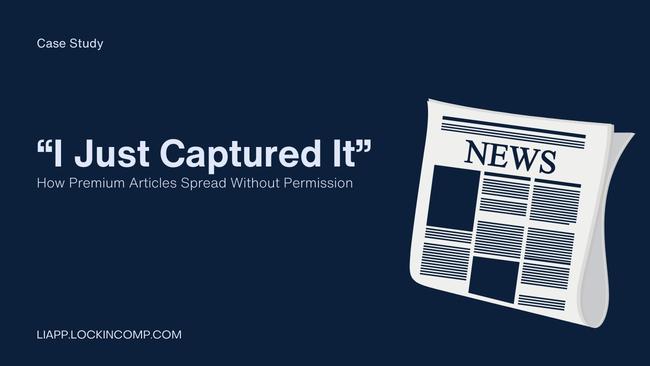
A commuter opens a premium news app on the subway on the way to work. After paying a monthly subscription fee, they click on an in-depth analysis article.
A few hours later, however, reports start coming in that the same article is being shared across online communities and social media as image files and PDFs.
“But this is a paid article.”
The response was surprisingly simple:
“I just took screenshots. The app allowed it.”
At that moment, the problem became clear.
The content was not being adequately protected.
A Real-World Content Leakage Incident
Why Did Premium Articles Become Free?
The news and magazine app invested heavily in content quality, but security for the app execution environment was relatively weak.
Attackers used methods such as:
• ✔ Taking screenshots and recording the screen normally
• ✔ Removing restrictions through repackaged and modified apps
• ✔ Directly extracting resource files
• ✔ Accessing displayed content using debugging and hooking tools
As a result:
✔ Full images of paid articles could be saved
✔ Entire premium magazine pages could be captured
✔ Content could be repeatedly accessed through unauthorized viewers
All of this became possible.
The server remained secure.
The problem was that the application where the content was consumed was not secure.
Where Was the Real Security Gap?
The issue was not simply the screenshot feature itself.
The core problems were:
- The app could still run in modified or tampered environments.
- Screen and memory access were not controlled in real time.
- The platform could not distinguish legitimate users from abnormal execution environments.
In other words, the biggest security gap was the inability to verify:
“Who is viewing this content, and from which application?”
How LIAPP and LISS Helped Defend the Platform
After the incident, the platform redesigned its security architecture with a focus on client-side protection.
LIAPP – App Integrity & Runtime Environment Protection
• ✔ Real-time detection of app tampering and modification
• ✔ Blocking execution of repackaged and MOD applications
• ✔ Immediate detection and prevention of debugging and hooking attempts
• ✔ Protection against resource extraction attacks
LISS – Preventing Content Theft Through the Screen
• ✔ Detection of screenshot and screen-recording attempts
• ✔ Detection of screen capture, screen mirroring, and remote support tools
What Changed After Implementation?
The improvements were clear.
• ✔ Significant reduction in leaked images of paid articles
• ✔ Fewer new posts appearing in unauthorized communities
• ✔ Restored trust among journalists, writers, and publishers
• ✔ Reduced subscription cancellation rates
Most importantly, the platform was able to send a clear message:
“We actively protect our content.”
Key Takeaways
For news and magazine applications, content is not simply text.
It represents:
• Revenue
• Brand value
• User trust
Today:
- High-quality content alone is not enough to protect it.
- Server security alone cannot prevent content leakage.
- Protecting the application environment where content is consumed has become essential.
Content protection is no longer optional.
It is a fundamental requirement for the survival of any digital content platform.
#ContentProtection #NewsAppSecurity #MagazineAppSecurity #PaidArticleProtection #PremiumContent #ScreenshotBlocking #ScreenRecordingPrevention #AppIntegrity #MobileSecurity #ContentLeakPrevention #LIAPP #LISS #LIKEY #DigitalCopyright #SubscriptionBusiness #PlatformSecurity #IPProtection