“The Purchase Went Through, But No Money Was Paid”
How In-App Purchase (IAP) Tampering Quietly Drains Revenue from Comic and Webtoon Apps
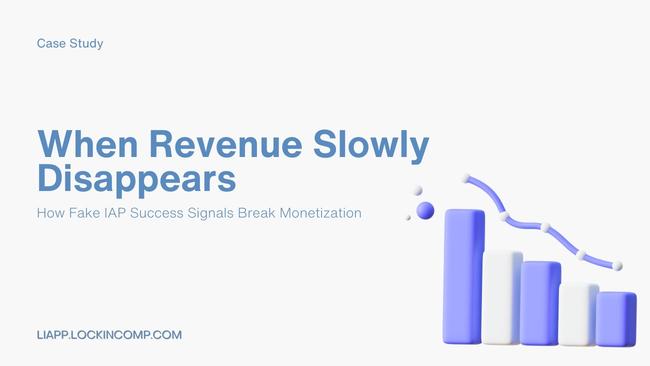
“Payment logs look normal... but the revenue numbers don't.”
One month-end, the atmosphere in a platform operations meeting felt unusually tense.
Views for popular titles continued to grow.
Traffic spiked whenever premium episodes were released.
User engagement appeared healthy.
Yet revenue was slowly and steadily declining.
There had been no major breach.
No server outage.
No obvious security incident.
The truth emerged much later.
“Some users were accessing paid content without actually paying.”
The Incident: How Was In-App Purchase Security Bypassed?
The investigation revealed a sophisticated attack strategy.
Attackers were able to:
-
Manipulate payment completion values within the application
-
Forge successful in-app purchase (IAP) responses through runtime hooking
-
Generate unlimited coins and premium passes
-
Unlock paid episodes repeatedly without payment
What made this attack particularly dangerous was that the server itself was never directly attacked.
Instead, attackers executed modified applications within rooted devices or emulator environments and manipulated payment logic during runtime.
From the server's perspective, everything appeared normal:
-
Purchase request received
-
Purchase response returned
-
Access granted
Meanwhile, revenue was quietly leaking away.
For attackers, the model was highly attractive:
✔ Low risk
✔ Easily repeatable
✔ Profitable over long periods
Where Did Security Break Down?
The root cause became clear.
The platform relied almost entirely on server-side validation.
Several critical gaps existed:
-
Trusting payment verification solely on the server side
-
No validation of the application's runtime environment
-
No detection of hooking frameworks or memory manipulation
-
Payment logic remained active even within compromised applications
In other words:
Payment security was treated as a server problem, while application security was overlooked.
In reality, the purchase process happens inside the user's device.
If that environment cannot be trusted, payment flows can be manipulated.
A LIAPP-Based IAP Protection Strategy
To address the issue, the platform implemented LIAPP.
LIAPP – Protecting Payment Logic
LIAPP treats payment mechanisms as critical business assets.
Its protection capabilities include:
-
Application integrity verification
-
Detection of modified and repackaged applications
-
Rooted device and emulator detection
-
Runtime hooking framework detection
-
Automatic termination when payment or subscription logic is modified
Once payment-related logic is tampered with, the application is prevented from operating normally.
This eliminates opportunities to manipulate purchase completion values.
Results After Deployment
The impact became visible almost immediately.
-
Abnormal increases in free coins and premium passes disappeared
-
Revenue from paid episodes returned to expected levels
-
Long-term unexplained revenue leakage was eliminated
-
Creator settlement accuracy improved
-
Internal audits became easier to manage
One outcome stood out above all others:
Revenue stopped disappearing quietly.
Previously, the losses were difficult to identify and even harder to prove.
After deployment, the attack became structurally impossible.
What the Operations Team Learned
One team member summarized the experience:
“It never felt like we were being hacked. Revenue just kept slowly shrinking, which was even more frightening.”
Another added:
“After implementing LIAPP, it became impossible to access premium content without paying.”
Key Takeaway
Revenue protection is not an optional feature for comic and webtoon platforms.
A sustainable premium-content business depends on:
-
Application integrity
-
Trusted execution environments
-
Runtime protection of payment logic
Only when all three conditions are met can digital content monetization remain secure.
Without revenue protection, even the most popular content cannot sustain long-term growth.
#ComicAppSecurity #WebtoonSecurity #IAPSecurity #InAppPurchaseSecurity #MobileAppSecurity #RevenueProtection #ContentMonetization #RuntimeProtection #AppIntegrity #RootDetection #EmulatorDetection #LIAPP